

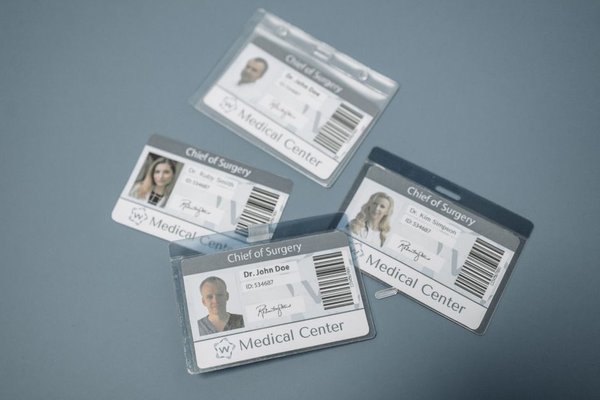
A surgeon’s mistake can raise questions about more than what happened in the operating room. It can also raise a separate question: why was that surgeon allowed to perform the procedure at that hospital? Negligent credentialing by hospitals focuses on an institution’s decisions to screen, approve, renew, or restrict a clinician’s authority to treat patients. The claim is not that every poor outcome proves faulty vetting. It is that an unreasonable hospital decision may have exposed a patient to a foreseeable, preventable risk.
What credentialing and hospital privileges mean
Credentialing checks a clinician’s qualifications and professional history. Privileging determines which procedures or services that clinician may perform at a particular hospital. A valid medical license does not automatically qualify someone to perform every complex procedure.
U.S. Medicare hospital standards require organized medical staff, periodic appraisals, review of candidates’ credentials, and governing-body oversight. Under 42 CFR 482.12 and 482.22, decisions consider competence, training, experience, and judgment, alongside state law and medical staff bylaws.
Screening before granting privileges
Meaningful physician vetting can involve verifying licenses, training, references, previous privileges, and relevant disciplinary history. Hospitals must query the National Practitioner Data Bank (NPDB) when practitioners apply for medical staff appointment or clinical privileges. The NPDB includes certain reports about malpractice payments and adverse professional actions, but it is not a complete record of every complaint or medical mistake.
Monitoring after approval
Responsibility does not end with the initial application. Hospitals must query the NPDB at least every two years for covered medical staff and privileged practitioners, and when practitioners seek expanded privileges. Hospital supervision and medical staff review may also consider patient outcomes, complaints, performance concerns, and whether a doctor’s approved scope still fits their abilities.
Where a credentialing failure can occur
A negligent credentialing claim concerns a failure in hospital decision-making, not simply a bad result. Potential failures include approving privileges without investigating a serious warning, authorizing procedures outside documented competence, ignoring credible concerns during renewal, or failing to review new performance information.
A warning sign is not proof of unfitness. For example, a prior malpractice payment does not automatically establish incompetence. The questions are what the hospital knew or reasonably should have discovered, how it evaluated that information, and whether its decision was reasonable.
Example: privileges beyond a physician’s experience
Imagine a hospital grants a physician privileges to perform a demanding operation. The application shows limited recent experience with that procedure, and a previous hospital has documented concerns about the physician’s performance. The credentialing committee approves the request without resolving those concerns. Months later, a patient is injured during the operation.
Those facts justify investigation, but do not establish liability by themselves. The patient would need to show that the physician’s treatment was negligent, that reasonable vetting would likely have withheld or limited the privileges, and that the approval was causally connected to the injury. An unavoidable complication would not become negligent credentialing merely because the outcome was serious.
The practical question is specific: what information existed before approval, and would a careful review have changed which procedures this doctor could perform?
What a patient generally must prove
Requirements differ by state, and jurisdictions do not treat negligent credentialing identically. Where the claim is recognized, the analysis commonly involves duty, breach, causation, and damages.
Duty asks whether the hospital owed a legally enforceable obligation to exercise reasonable care in selecting or retaining the practitioner. Breach asks whether screening or review fell below that obligation. Causation asks whether proper action would have kept the physician from providing the care that injured the patient. Damages concern the resulting harm.
Proving the doctor’s underlying medical negligence is essential in many cases. Expert testimony may address both the treatment standard and the hospital’s decision. A concerning personnel file alone is not enough without a connection to the actual injury.
Evidence that may matter
Relevant materials can include applications, requests for hospital privileges, renewal decisions, verification records, previous restrictions, performance reviews, and contemporaneous warnings. Medical records and expert opinions help determine whether the treatment itself was negligent.
Access may be limited. State peer-review confidentiality laws can protect internal records, and federal rules restrict disclosure of NPDB information. Courts may need to resolve discovery disputes; patients cannot necessarily obtain a hospital’s complete credentialing file on request.
How this differs from medical malpractice
An ordinary medical malpractice claim examines the clinician’s treatment, such as diagnosis, surgery, or follow-up. Negligent credentialing examines the hospital’s decision to authorize that clinician to practice. The same injury may support both theories, but the evidence is different.
This distinction matters when a doctor is an independent contractor. The absence of an employment relationship does not necessarily end a hospital’s institutional responsibility. Conversely, hospitals are not automatically liable for every mistake made by doctors with privileges. Broader hospital liability claims, including negligent staffing, can have different legal requirements.
State law can change the outcome
There is no nationwide formula for these lawsuits. States differ on whether and how the claim is recognized, expert-report rules, filing deadlines, damages, and protection of peer-review decisions. Texas, for example, has a particularly demanding statutory rule for improper credentialing through peer review requiring malice, not simply ordinary negligence.
Federal hospital regulations help explain expected credentialing practices, but a regulatory violation does not automatically establish a private right to sue or prove every element of a state-law case. Local legal analysis matters.
Steps to take if negligent credentialing is suspected
Begin with evidence you can preserve: request the patient’s medical records, note the physician’s name and procedure date, and document the injury, additional treatment, and financial losses. Save any written communications about concerns with the doctor’s qualifications or care.
Consider an independent medical review and speak promptly with an attorney familiar with medical malpractice evidence and hospital negligence cases. Deadlines or pre-suit requirements may apply before an internal hospital investigation is complete. Do not assume public disciplinary searches show everything the hospital knew.
Frequently asked questions
Can a hospital be sued for credentialing a doctor who is not its employee?
Potentially. A hospital’s own privileges decisions may be examined separately from the doctor’s employment status, subject to state law and the specific facts.
Does an NPDB report automatically prove negligent credentialing?
No. A report may warrant investigation but does not establish that privileges were unreasonable or that the report caused an injury. The hospital’s response and the evidence of causation matter.
Can patients obtain a doctor’s credentialing file?
Not necessarily. Credentialing and peer-review materials may be confidential or privileged. An attorney can assess discovery rules and potential exceptions in the relevant jurisdiction.
Must a physician have prior malpractice claims?
No. Allegations may instead concern inadequate verification, insufficient procedure-specific experience, or ignored performance warnings. Proof of an unreasonable decision and an injury linked to it remains necessary.
Conclusion
Negligent credentialing by hospitals asks whether an institution exercised reasonable care before granting a doctor authority to treat patients and responded properly when concerns arose. A persuasive claim connects a specific oversight failure to an avoidable injury, rather than relying on hindsight after a complication. Because legal standards and access to evidence vary, careful review of both the treatment and the privileging process is crucial.